Be sure to subscribe so you don't miss a thing. You can subscribe via email. or rss feed. Or join me on Facebook or Twitter o4 follow me on Pinterest
Showing posts with label Green Living. Show all posts

Wednesday, May 30, 2012

The Problem with the Smell of Clean


IMG_3153-1


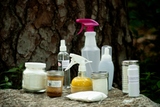
What does clean smell like? Ask most people and they will tell you it smells like lemons, or spring rain, fresh air, or  clothes dried on the clothes line.  but many of these so called “scents”  are artificial fragrances Manufacturer’s of cleaning products know and understand this too. Why do you think they allude to these scents in their products and advertising?  Many cleaning products have added fragrance.  Many fragrances are made up of a complex cocktail of natural scents and synthetic chemicals, many of these are petrochemicals. Even many so called green cleaning products are not really all that green.
Why do manufactures add fragrance? Fragrance is a key component to cleaning products – as it is often what distinguishes one product from another, and what creates brand loyalty. Companies take great measures to ensure that the fragrance is experienced fully by the user. Our sense of smell is one of strongest and we associate memories with certain smells,  Chemists, manufacturers and product companies know this.  If something does not smell clean how will we know that it is clean? Once a upon a time ago my husband helped a friend with a cleaning business. They cleaned with vinegar but before leaving a place they would spray in the air a little bit of Pine Sol. . Yup it was just so that there was the ‘smell” of clean. They got more referrals and compliments when they sprayed the bathrooms for the smell. The clients thought if it smelled clean then it was truly clean. 
The scents added to cleaners do not enhance the cleaning ability of most cleaners. Quite the contrary many fragrances can cause more harm than good.   Among the chemicals that are used to produce fragrance are chemicals associated with hormone disruption and allergic reactions.  Also in the ranks of undisclosed ingredients are chemicals with troubling hazardous properties or with a propensity to accumulate in human tissues. These include diethyl phthalate, a chemical found in 97 percent of Americans (Silva 2004) and linked to sperm damage in human epidemiological studies (Swan 2008)
Currently the United States does not require manufacturers to disclose the ingredients in fragrances, including the fragrances in cleaners, as this is considered proprietary information.
What can you do if you want to avoid chemical  fragrances that can cause problems ranging from allergies to cancer? 

  • Make your Own Cleaners – personally if it is not safe enough to put use on  my body I will not use it in my house.
  • Check out EWG they will soon be coming out with a data base of Cleaners but for now they have a Hall of Shame List for Cleaners, check it out make sure none of yours are on here. Surprisingly some  so called “green” cleaners are on here.
  • Use Alternatives for Chlorine in Cleaning

For More Reading.
Dirty Secrets - What's hiding in Your Cleaning Products
Physicians for Social Responsibility
EWG  Cleaners Hall of Shame

Tell me do you have a favorite Cleaner you like to use? It is safe?


this post is linked up with Your Green Resource

Thursday, May 24, 2012

Going Green Made Easy


IMG_3164


As Kermit the Frog said “It ain’t easy being green.”, but id does not have to be hard. There is so much that a green lifestyle encompasses sometimes it is hard to know where to start. Sometimes it can be overwhelming. Sometimes there is contradictory information out there. At times we feel guilty if we don’t do it all but just by making one small change we are part of the solution. Just by making small changes even one at time we can make a difference.  So how do you get started? Really anywhere is okay. But if you need some ideas then read on.
  • Use cloth bags  when you go shopping be sure to put them back in the car. One way to remember them when you go in the store is to put something like your coupons. shopping list or purse in the trunk with the bags.

IMG_4696
  • Drive your car less – for someone like us who lives out in the country this means I sometimes wait to get something or do without for a little while. Most nights Deacon G drives through town on his way home from work and can pick up things for us. Driving less means coordinating errands and kids activities. We schedule everything on the same night. Scouts, Dance, Soccer Chess Club all happens on Tuesdays, hence our crazy Tuesdays.
  • Get Stainless Steel Water Bottles – These will be BPA free and you can refill them, they will quickly pay for themselves even if the Labrador eats the lids. (yup it has happened.)
IMG_3495
  • Turn up the Air Conditioning and turn down the Heat. Set your AC above 72, we comfortably set ours at 78-80, depending on the outside temperature. In the winter set your heat to about 68 degrees or lower. Better yet get timer and set the HVAC system get the temperature to a comfortable range when you are at home. When you leave home you can turn it off or have it revert back to a less comfortable range.
  • Consider Composting – you don’t need to have acreage to do this. It can be done in a small yard, even at a town house. Not sure what to compost, then check out 36 Things You Can Compost.
  • Go Meatless Just Once a Week – Many people regularly go Meatless on Mondays (Meatless Mondays, anyone) and millions of Catholics go meatless on Fridays.
  • Take you Lunch from home – using a reusable bag and containers of course.
IMG_3153-1
  • Hang up your clothes to dry. – if you don’t have a clothesline you can use a drying rack. Even if you only hang up your clothes in the warmer months you will reap many benefits, the least of which is a lower electric or gas bill.
  • Buy Local,  Buy in Season – this cuts down on transportation costs as well as helps support local farmers at the same time. The Farmer’s Market is a great place to Shop Local, but even some regular grocery stores will feature local foods.
  • Recycle – Reduce, Reuse, Recycle. – Start with the reduce, buy less, and buy things with less packaging. Reuse what you have, before you recycle it try to find a new use for it. Up cycle it first. T-shirts can be made into bags for shopping. Recycle is not just for the curbside you can find new uses for clothes and furniture too.  Try out your local Free Cycle Group.
IMG_5692

Friday, April 27, 2012

Staying Cool when it is Hot Out


IMG_1111

Today we are experiencing some unseasonably warm weather. 90 degrees in April anyone? But as you can imagine I am NOT  turning on the AC. Every so called sane person around me has probably done. But I have my standards, and April is just too early for me to turn on the AC, actually May is even too early for me to turn on the AC. So how does one keep cool when the thermometer is rising.
  • Turn on the ceiling fans – but only when you are in the room. A ceiling fan will drop the temperature by 5 degrees by causing a breeze.
  • Plan your cooking for the coolest part of the day, for some this is in the morning, for others after the sun goes down. While you are cooking, go ahead and cook twice as much. This will help you to not heat up the kitchen so much later
  • Eat more uncooked foods. Raw foods like salads and fruits help to keep your body cooler.
  • When the sun comes up close the curtains. Better yet get some curtains that are insulated, not only do they keep out the cold in the summer they keep out the heat in the summer.
  • If you are lucky enough to have the temperature drop when the sun goes down, open the windows at night. Sometimes it is cooler outside then it is inside
  • If it is only marginally warm, open one window downstairs and one window upstairs, at the opposite side of the house. This will create a draft effect and pull the cool air though the house. You can even use a box fan to help pull the hot air out of the house.
  • Don’t run any appliances, like the dryer that will add heat to the house. Better yet use a clothesline if you can.
  • Be sure to stay hydrated, when the temperature rises, we tend to perspire more. This is our body’s way of cooling us off. Don’t try to stop the perspiration, because it is a cooling mechanism, rather drink more and remember water is the best drink for hydrating.
  • Get into some water – go for a swim, water the garden, wash the car or just take a shower. You will cool off your body’s core temperature in doing so.
  • Wear a hat when you go outside, I know you are supposed to wear a hat to keep in body heat, but if you wear a loosely woven straw hat it will shade you and that shade keeps you cooler.
  • If you can’t take a shower, just wet your hair, having wet hair will cool you down.
  • Dress appropriately, think about it, people who live where it is very hot tend to cover up more than they expose. When the humidity is low this works because it keeps the sun off of your skin. I like to wear a light weight shirt over a sleeveless dress. Long flowing clothing will keep you cooler. Natural fabrics like cotton, silk and linen will breath.
  • Run cold water over your wrists, this cools down your blood going back to your heart, and will cool you down very nicely.

What are your Favorite tips for staying cool when it is HOT out?

Sunday, April 22, 2012

The Green Thing–Celebrating Earth Day


rainbow earth

I haven’t given much thought to Earth Day this year. I know, gasp. I me I am supposed to be green, right? When I mention many of the green things  we do around our house my husband’s grandmother who is going to celebrating her 80th  birthday in May, says “Oh we used to do that growing up” My own father would have been 74 this May grew up in the same generation as my husband’s grandmother. Their generation lived by the motto Use it Up, Wear it out, or Do Without.
To their geneeration recycling was just plain thrifty and finding a way to reuse something instead of wasting it. My farther regularly used coffee tins to store his nails, screws and other small parts in his shop. I guess my parents passed on this way of living to me,
My mother practiced organic gardening not because it was trendy but because chemicals were expensive. She will tell you stories of the older immigrant ladies in her neighborhood growing up who would pick “ditch weeds” to make salads and teas in the spring,
We used a push mower to mow more than an acre of yard because it was what people did, no gas powered weed eater or edging tool either, we used a hand sheers and kid power.
My parents would find ways to fix things or use things until it could no longer be fixed. My husband and I learned these skill from our parents and grandparents, we do not go out and replace a TV because it is broken we may not replace it all.  If an appliance is not working properly we fix it ourselves, just like our parents did.
Now we recycle because if we don’t who will? We buy less because we don’t really need to keep up with the Joneses, we find ways to reuse or repurpose or upcyle clothes and old furniture because it is fun not because we have to.
I buy old furniture to save money but truth be told it is of a better quality – NO particle board, sold wood construction. The bonus is I have furnished my living room over the years for about $350, less than the price of one cheap couch.
Earth Day is not about planting one tree or making a craft with your kids one day then going back to “normal”. What if we made EVERYDAY Earth Day, and consumed less and recycled more?
Earth Day is a good time to reaffirm all those Green Lifestyle choices we make, and make new resolutions. I know that will be getting back to using my own bags and again and hanging clothes out to dry. What Earth Day Resolutions will you be making this yea?


https://www.facebook.com/heather.streeter/posts/3743052785409

Monday, April 2, 2012

Make Your Own Natural Bug Spray


IMG_4833

Did you know that the main ingredients in most commercial bug sprays and repellents, Deet, is a neurotoxin and is harmful to the brain. Yup you read that right, harmful to our brains. If you do use deet it is recommended that the bug spray not be applied to the skin, but rather to the clothes.  I have never been a fan of deet before and avoid bug sprays for my family and myself, lucky for us we don’t get many bites these days. Something about a good diet makes you a bad target.
For years I have sworn off bug repellants of all sorts. I have instead incorporated plants into the landscape that help to repel the bugs. This works well when we are at home, but now that kids are old enough to go off to camp they need something to take with them.
Last week I wrote about natural methods to combat fleas and ticks on pets, many of the same methods used on our pets can be used on us; diet, essential oils and vigilance.
Making your own bug spray is not that hard. It is just as easy as making your own cleaners. My favorite bug sprays are easy to make. You can take some of your favorite essential oils and combine them in a spray bottle for a safe and easy effective bug spray.
In an opaque spray bottle combine
  • fill about 1/2 full with distilled or boiled water
  • fill almost to top with witch hazel
  • add 20-30 drops of essential oils of any of the following essential oils: rosemary, lemon eucalyptus, citronella, clove, lavender or tea tree oil.  – The more oils you use the stronger the spray will be
  It took me longer to write this than it did to mix it up . Do you have a favorite remedy for repelling bugs?

This post is linked up to Frugal Days Sustainable Ways, Wildcrafting Wednesday, Your Green Resource

Sunday, March 25, 2012

Quick and Easy Composting


compost-bins-made-from-pallets

Not long ago I wrote 36 Things You Can Compost. Today I would like to share with you how easy composting can be. So many of us hear the words composting and we think, “I don’t have room for that”, or “yuck, smelly, and messy” Well I am going to try to debunk those myths.
Composting can be small and easy if you want it to be. It can be as easy as
  1. Collecting your kitchen scraps in a bowl or even plastic container with a lid (I did not just say plastic did  I? Yes I did, better to reuse it for a non-food purpose than throw it away.)
  2. Empty the kitchen container into a larger container or a compost pile. I use both to tell the truth.
  3. Turn the compost pile occasionally(gardening can count for exercise).
  4. Let it cook
  5. Enjoy spreading it in your garden or compost in place.
You don’t need a lot of space to compost, you don’t even need a house with a yard. Stephanie at Good Girl Gone Green is composting in an apartment. People in Germany regularly set out the compost along with their recycling and trash. Guess which container is the smallest? Yup the trash.
I started off with a small garden in a town house when we were first married, I would compost the food in a 5 gallon bucket outside. Now I have  a counter top composting crock. When that is full we empty, usually once a day, we empty it into our outside compost bin. Our outside bin is an old trash can that is cracked and full of holes on the bottom. This allows the water to permeate down and out. Water is a key component to composting. When our outside barrel is full we dump it onto our compost pile. Since I like to practice composting in place, our compost pile moves to where ever I am planning a new garden bed. This saves me time in moving the compost to the new bed once it is done.
How about you, do you compost? Do you plan on composting this year? Any good tips for composting? Share below.


see more great posts at Your Green Resource


Technorati Tags:

Monday, March 5, 2012

36 Things you can Compost

Welcome everyone if you are visiting from Pinterest take a moment and subscribe so you don't miss anything. You can also follow me on Pinterest 

Pumpkin Composting

Compost is like liquid gold to gardener, it amends the soil and is its own form of recycling. We are big fans of composting here. You don’t need a lot of room to compost either. Even we lived in a little townhouse and only had a patio I practiced a form of composting, (much to my husband’s chagrin).
What can you Compost? the following is a list of things that I may have composted at one time or another. Note the bucket in the picture this is our "outside" compost bucket.  But I will save that story for another time.

  1. eggshells
  2. leftover coffee
  3. coffee grounds
  4. vegetable peelings
  5. fruit cores, and seeds
  6. fruit peels
  7. leftovers – meatless ones
  8. paper towels (if you are using them you can reuse them)
  9. Leftover water from your water bottle
  10. junk mail (be sure to opt out of this)
  11. the newspaper, tear it into strips first
  12. the contents of your vacuum cleaner
  13. ashes from your fireplace – make sure they have cooled and there are no live embers in them
  14. cardboard boxes – tear this up too
  15. mistakes from baking –this hardly ever happens anymore at my house
  16. Plate scrapings – scrape the kids plates off into the compost bucket
  17. lint from the dryer
  18. Pet hair – you know the stuff they shed all over the floor you just vacuumed
  19. Tea bags and loose tea
  20. Dead houseplants
  21. Kleenex
  22. Moldy Cheese
  23. Fruit pits, olives, peach, apricot, etc.
  24. Mystery items in fridge (as long as meatless)
  25. toilet paper tubes
  26. Natural fiber(cotton) rags that have outlived themselves
  27. Cardboard egg cartons
  28. pencil shavings
  29. used matches
  30. Leaves raked up in the yard
  31. Manure from horses, and other grazing animals like goats and sheep (but not from dogs and cats)
  32. Hay and bedding material from gerbils, rabbits, and guinea pigs, as well as barn animals
  33. Grass clippings
  34. Weeds – make sure they have not gone to seed
  35. Trimmings  from your plants in the garden
  36. Dead plants from the vegetable garden at the end of the season
Do you compost? What is your favorite thing to compost?


This post is linked up to frugal Days Sustainable Ways, Your Green Resouce, Living Well Blog Hop, Wildcrafted Wednesday
Technorati Tags: ,

Monday, January 23, 2012

Cleaning Gardener’s Hands


dirty_hands
image credit
What to do when your Hands Look Dirty Like This
I am an avid gardener, both vegetable and flower beds. One consequence of this avocation is that my hands dry out easily, they are in dirt a lot and with the constant washing it tends to dry them out more. Over the years I have tried a variety of things to alleviate this dryness and rid myself of the ground in dirt that seems to be constant on my hands. Some of these remedies work better than others but I bet they include things already i n your home.
  • A little liquid soap. I will coat my hands with a little liquid soap, like Castile Soap, but a non-allergic liquid dish soap would work well too. When I started doing this I noticed that it not only made my hands easier to clean because the dirt was on top of the soap, it helped to cut down on the contact dermatitis.
  • Olive oil and honey. I like to use this after I come in from gardening after rinsing the castile soap and dirt off my hands I will continue to wash them with a mixture of 50% olive oil 50% honey. The oil helps to emolliate and cleanse at the same time, while the honey helps to clean, act as an antibacterial and  humectant, thus sealing in the moisture.
  • An olive oil sea salt scrub, I just mix a little olive oil and sea salt on my hands and work it in, rinse off when you feel you have removed the dirt. Alternatively you can use oatmeal or brown sugar to scrub with.

I tend to open my cupboard and see what is readily available to scrub my hands with. It is not too important to me what I use as long as it is something I would eat it is safe for my skin.
Remember DON’T PUT ANYTHING ON YOUR BODY YOU WOULD NOT PUT IN YOUR BODY!


How do you like to get your hands clean after working in the garden?

this post is linked up with Seasonal Celebrations at Natural Mothers Network, Homestead Blog Hop

Tuesday, December 20, 2011

The Life Cycle of a Christmas Tree


IMG_9724-1

We enjoy a Real Christmas Tree at our house.  I have many reasons for loving my live tree chief above them is that I grew up with real trees.  Recently I was wondering if having a real tree was best for the environment. I got some good news. It is (source) While is true that the greenest Christmas Tree is the live tree in many parts of the country it just is not feasible to use a live tree because you can not plant them  when the ground is covered in snow or frozen.
If you have a Real Tree Christmas tree what to can you do with it once Christmas is over?
Depending on where you live you have multiple options.
Now I understand you may not have these options available to you but many towns and cities do have options for recycling your Christmas trees
  • Many cities have Tree Recycling Programs
  • Make a Bird Tree
  • Use it for a fish habitat in a lake or pond
  • If you live near the shore or a lake check to see if the local beaches use Christmas trees for soil erosion prevention.
  • Check to see if your city has a Burning of the Greens. Some cities collect the Christmas trees and burn them in a great bonfire, not only is this a safe way to have a bonfire, the local fire department gets some practice. 
As tempting as it may be do NOT use your Christmas tree as firewood. Christmas trees are evergreens, they have a lot of pitch and will burn hot, but they are still green and will smoke and worse still may start a chimney fire.  When I say we may use it as kindling the tree has been seasoning for almost a year before we cut it up.
At our house our has it’s usefulness after Christmas.   Since we get a real tree we wait until Gaudette Sunday to put it up.  Our tree will stay up until New Years Day, another family tradition.  When the tree has been stripped of all its glory it still lives on. We  decorate the tree for the birds, making bird seed ornaments, and popcorn garlands.  Now the tree can only last so long even outside. By the time the first signs of spring start coming around it is time to take down the birdseed tree. At that point our tree joins a brush pile, benefits of having 5 acres. While in the brush pile it becomes an important part of our little eco system here. The brush pile provides a safe haven for little animals and birds in the winter. The birds that winter over will nest and perch in the brush pile.  Now what do you do with a brush pile you ask? Well at some point in time it either gets cut up for kindling or burned in a brush fire.  Setting fires in pastures is a time honored practice here in Oklahoma and other parts of the Midwest.  Ranchers and before them, local Indian Tribes practiced control periodic burns as a means to to rejuvenate the soil.


This post is linked up to Your Green Resource at Sorta Crunchy
Monday, December 12, 2011

Is Wood Good for Heating a Home?


Oklahoma weather is what I like to call bi-polar meaning that we get it all. If you don't believe me look at these weather stats. Coldest Day 2011 saw us get down to -31 degrees and our hot summer saw 41 days over 100 degrees this year. Heating and cooling a home are important topics here.  As is saving money while doing it.

What is the most efficient cost effective way to heat a house?
Winter weather is settling in for most of us. We have had a cold snap here with overnight lows below 20 degrees. Not that cold for some of you but colder than normal for this time of year here. I took the recent cold snap as a cue to stock up on fuel for the winter. This past week I ordered another cord of wood and 100 gallons of propane. While I was arranging for my orders I began to wonder what is the most cost effective and at the same time ecologically sustainable way to heat our home for the winter. My daughter being a smart teenager suggested solar, while we do enjoy passive solar heating during the winter, thanks to a well designed home. However passive solar heating does nothing when it is cloudy. We need another option. Living in Oklahoma our winters are generally milder than most. Our average temperatures for winter are in the mid 40s to lower 50s with  overnight lows in the 20s and 30s. Add to the mix a house that is built into the side of a hill and we have a pretty efficient house to heat or cool. Until the ground freezes our downstairs remains a pretty constant temperature, about 55 without heating. If the sun is shining we have the advantage of the passive solar heat with large windows and wood floors absorbing that heat.

According to Popular Mechanics the average 2400-square-foot house, proud to say we are an average size home,  burns around 100 million Btu of fuel per year. The chart below is a great graphic for breaking down the cost of heating homes. Now our cost for wood is actually less than what is listed here. We happen to pay $150 for a cord of wood. For those of you unfamiliar with the measurement a cord of wood is defined as a well stacked woodpile 4 feet (122 cm) wide, 4 feet (122 cm) high, and 8 feet (244 cm) long.

We use a mixture of propane, because the house came with a propane furnace, and wood. We have a fire place with an insert, glass doors and a blower. This make our fireplace more efficient than a wood stove, but not as quite as efficient as a ceramic heater, although our brick chimney does begin to heat up and radiate heat after a day of the fire going. Properly designed fireplaces also can decrease heat loss. Modern fireplaces may have metal side walls and backs with space for air to circulate between the walls and the fireplace setting. Inlets near the floor and outlets near the mantel provide convection-air heating and circulation in addition to the radiant heat from the fireplace.
I was dismayed to see that propane was not that efficient but at the same time I was VERY happy to see that burning wood is a  good choice for not only for efficiency and cost effective wood is also a prudent choice for sustainability. Trees while are a sustainable resource. In our case we harvest only standing dead wood on our property and most of our suppliers do the same. In fact one of them is harvesting wood from river beds. In essence they are clearing out the the river. Some of this wood is wood that may have sunk during logging days.
Our Plan
So what is my plan. Some of you may remember me joining in with the Freeze Yer Buns Challenge. Well I am proud to say that we have only turned on the heat to make sure that the furnace is working properly. We plan on heating with wood for the most part as in years past.  When the temperature in the main living area gets above 72 degrees we turn on the circulator on our furnace only to help move the warmer air around the house.  The furnace is reserved for those really cold mornings when the temperature in the house has dropped below 65 degrees and we need some motivation to get up. Most of the time we will not see nor hear the furnace come on. Even in the midst of our blizzard and sub freezing temperatures last year we did not have the furnace come on.
Over the years we have found that best woods for heating are the hard woods and the best ones are the ones with the least water content. All woods burn cleaners and hotter when they have been seasoned. .
I always knew we were saving money by burning wood, just the fact that we had an efficient fire place, one with an insert and a heatilator. Now I am relieved and happy to know that we are indeed saving money not just on paper but in reality and we are doing so in a sustainable way.

this post is linked up to Simple Lives Thursday, Homestead Barn Hop

Sunday, November 13, 2011

White Sage for Cold Relief


image credit
I enjoy learning new things and you never know where or who you learn it from. While attending a Mountain Man Rendezvous I had an opportunity to learn a new cold remedy. My husband is Cherokee and because of that we try to incorporate his culture in our lives. So when a lovely lady told me of a new to use for White Sage I was eager to try it. As it turned out,  my oldest is dealing with a cold. So we tried this remedy as soon as we got home. White Sage is typically used in smudging and cleansing ceremonies by Native Americans. However it does have medicinal uses too, It can be made into a tea, which reduces mucous secretions of the sinuses, lungs and throat, salivation and sweating. Cold Sage tea can be a good remedy for stomach tonic, while a warmer Sage tea is good at sore throats remedy. The Sage’s leaves are also used as a remedy for heavy and painful menstruation when it is applied as a uterine hemostatic tea..  Considering that most cough syrups are not effective Why not give this remedy a try next time you have a cough or cold?
  • White Sage – 1 tsp.
  • Honey – 1 tsp.
  • Lemon juice – 1tsp

To use make an infusion by pouring  1 pint of boiling water on to 1 OZ. of the dried herb, 1 tsp. of honey and the juice of one lemon. Let it steep for about 30 minutes.  Strain it and drink it up. We like to use the French Press for making our infusions. Your dose will be anywhere from 3 oz. to 8 oz.  Take throughout the day.

this post is linked up to Homestead Barn Hop, Frugal Days, Sustainable Ways, Healthy 2Day ,Wednesdays, Spa SunDaze

Technorati Tags: ,Native American cough remedy

Monday, October 31, 2011

Last minute Green Halloween Ideas


It is All Hallows Eve tonight. But it is not too late to Green your Halloween. Having a Green Halloween is not too hard. It just takes so forethought.
  • Make your own costumes or repurpose old ones. My daughters both made their own tutus, reused their own shirts and leggings. My dear husband reused clothes already in his closet. While my baby boy reused a costume worn by his oldest sister, but reinvented it to be a ninja, while she had been vampire.
IMG_8877

  • Walk around your neighborhood for trick or treating, instead of using a car  This saves on gas, carbon emissions while lets you get exercise and get out to meet the neighbors
IMG_8909-1
  • Make your own trick or treat bags. When I was a kid we used to decorate paper grocery bags. I have made these bags for my kids from t-shirts. They took me about 15 minutes total to make. A bonus is that the jack o lantern one glows in the dark!


Monday, September 26, 2011

Green Your Halloween–Repurposing Costumes


Halloween 2009                                       Halloween 2010
Family Pictures - 11-09 208IMG_1843
Halloween is coming up soon, my kids are already thinking about it and making plans.  For us it involves more than just Trick or Treating. There is a Fall Carnival at school, where students are encouraged to dress up in costume, we try to hit the local Halloween Parade/Trick of Treating in the big town on the Saturday before Halloween and then of course there is the big candy night.  Follow all that up with a get together with other Catholic Families to celebrate All Saints Day and we have a busy week. For my kids that often means a change of costumes as well. They like to have their options.  This is only compounded by the fact that we often go from 80 degrees during that week to 40. Necessitating different options for clothes. 
What is any sane, rational mom of three kids who like to dress up in costumes to do? We have many routes we take here at the Granola Catholic Home
Today I would like to talk to you about repurposing costumes and clothes you already have.
In the above photos, Peanut is wearing parts of a Pavada, a traditional Indian outfit  for the Bollywood Look  Pumpkin is dressed as High King Peter , his “tunic” is actually an old dress up skirt that I made for the girls a long time ago. We paired it with a pair of sister’s leggings and a body armor undershirt. Accessories from the dollar store or the dress up trunk. Pi is a pirate. She is wearing a velvet cape, that is in actuality an old velvet skirt of mine that was no longer flattering.  The tunic is homemade not by me. I purchased it at a thrift shop for $6.99 we finished out the outfit with another pair of leggings.  Last year Pi wanted to repurpose the tunic and  create a different outfit, but she grew about 4 inches. So Peanut got her chance. She choose to be a fairy with the same basic piece. We added wings fro the dollar store and a homemade wand. A “new” costume for just $1.  I just love repurposing clothes and costumes from home to create something new. And that is a good thing, because my kids will change costumes right up to the moment the step out the door to go trick or treating.
National Costume Swap Day
Now I recognize that not everyone is crafty and creative, so how about checking out the National Costume Swap Day. This year, October 8th is national Costume Swap Day. Do you still have last year’s Halloween costumes? Are they in good shape? If you are not planning on repurposing them yourself you might want to find a Costume Swap event near you.

this post is linked up with It's a Keeper 

Monday, September 19, 2011

It is not Easy Being Green


medium_kermit


I  think Kermit the Frog said it best. Even though my brothers and I grew up in a Green Family. We did not realize it growing up but looking back there were many signs of it.
  • My parents bought property out in the country that had enough land to garden on.
  • They built their house in stages, paying for it as they went, the only mortgage they had was on the land itself.
  • My mother put a vegetable garden in the FRONT YARD. Unheard of even in the 70's, controversial today.
  • My mother nursed her children during a period time when breastfeeding was at an all time low.
  • We recycled cans and newspapers. Taking them to the recycle depot ourselves
  • My mother canned her garden’s bounty.
  • My father harvested dead wood for our wood stove. That means he did not cut down any green wood, just the dead wood in the forest. This is beneficial for the forest as in that it allows for sunlight to get to the forest floor and promote new growth.
Flash forward, to now. Somehow I returned my roots. We garden organically, I buy local food, I cook from scratch, line dry my clothes, I breastfed my children. But it is not always easy being green. Those who live a green lifestyle often have to work at it. For us recycling still means driving it to a collection point. My kids have to take out not only garbage but the compost. Being green means we keep our house hotter than normal in the summer and cooler than normal in the winter. Being green means we use alternative health solutions. Often times people don’t understand our lifestyle choices. Sometimes they are curious, sometimes they just don’t want to understand.
So what can you do?  Continue to stick to your convictions.  Living a green lifestyle is not anything new, it is not a fad or a trend, and if you are looking for some encourage or inspiration check out these great Green Blogs.
Good Girl Gone Green
Big Green Purse
Becoming Crunchy
What challenges have you overcome to live your Green Lifestyle?


Technorati Tags: ,

Sunday, September 4, 2011

E–Book Review and Give Away

This give away is now closed. Thanks to Everyone who participated. 


Regular readers of my blog know that I am a fan of natural cleaners. I have been making my own for years.  I started with just simple white vinegar when I first got married. It really helped me to get over some allergy and auto-immune issues I tend to have.

Even though I have been making my own cleaners for years, I am always looking for ways to improve them. How can I make them better, easier? So when Jenny at the Peaceful Housewife asked me if I wanted to review her new e-book I said sure.  I would just like to add that Jenny was one of the first people I linked up with when I started blogging for earnest this year. Even though we have not met IRL she is a local peep to me. Maybe one of these days our schedules will synch up.
First of all what I love about Jenny’s recipes for cleaners is that she uses ingredients you are likely to already have in your home, and if not, they are readily available at your local store. For example her furniture polish is simply olive oil and lemon juice.  My house smells good just mixing it up. If I have any left I can make my homemade vinaigrette with it. Jenny has included many recipes for the modern home, granite cleaner,  wet mop refill cleaner, stain remover, even a gel stain stick. Have I mentioned how much I miss my stain sticks?
Now I know that not everyone is a DYI sort of person like me. So if you would rather, Jenny has products available for sale on her website. The Peaceful Housewife.  All of her products come unscented or in your choice of scents, with the exception of their  Multipurpose Cleaning Spray and Glass Cleaner.  Those two items do not come custom-scented because the essential oils that we’ve chosen to use in them are part of what makes them work so well.
For those who are more adventurous and would like to try their own hand at making cleaners. I am giving away 2 copies of the e-book. All you have to do is  go on over to The Peaceful Housewife look at her scents and them come back here and tell me what scent you would love to try in your house.  This giveaway will be open until  9am Friday,  September 9, 2011.  I will be using Random.org to determine the results of the winner. Good Luck.

Monday, August 29, 2011

Avoiding Triclosan–or is this toothpaste bad for me?


photo credit
Just yesterday my dh yelled from the bathroom. “ Does this tooth paste have the stuff you wrote about the other day?” When he showed me the package I realized that yes it did have triclosan.  It seems that even in a green home we can find ourselves with less than desirable products. The more we learn about living green the more we can decide where to make our choices. For me avoiding toxins is very important. We have a strong history of cancer on both sides of the family. I am hoping that by avoiding toxins as much as we can possibly and eating as healthily as we can we can give ourselves and our children a fighting chance against our genetic dispositions.
 So How do We Avoid Tricolsan?
Choose bar soaps — triclosan was found in 76 per cent of liquid soaps and only 29 per cent of bar soaps in the U.S. (American Journal of Infection Control, 2002). I actually prefer bar soaps. Be sure to use a soap dish that allows the soap to drain and dry. 
When shopping for products look for and avoid the words Microban. Microban is  a formulation that uses triclosan and it has been added to products such as cutting boards, and diaper bags.
Check your toothpaste, most do not have triclosan in them but Total formula’s do, i.e. Colgate Total.
Avoid dish soaps that are antibacterial. The antibacterial aspect is not necessary and it may harm you in the long run.
Check your deodorant. Some use triclosan to kill the bacteria that cause the smell.  Even many natural brands, such as Arm & Hammer Essentials Natural Deodorant contain triclosan.
Check out the Environmental Working Group to find out what’s in your cosmetic products.
Read your labels, many common everyday household products contain triclosan. Sometimes triclosan is not listed as an active ingredient, it is added to increase shelf life. If the product advertises itself as antibacterial it probably has triclosan in it.
I did some searching to see if I could come up with some brands that specifically do not contain triclosan. I wanted to make shopping easier for me and you.  I found a few brands that do not contain triclosan
According to The Daily Green  there are a few brands that don't contain triclosan. I was pleasantly surprised to see brands that are readily available. Like Toms of Maine, Ivory, Listerine, and Purell and one of my favorite all around products. Dr. Bronner’s Magic Soaps.
Avoiding triclosan and other undesirable chemicals is not as daunting as it sounds. Stick to basic products that are designed to be simple. Remember that old adage about food? “if you can’t pronounce the ingredients you should not eat it? The same holds true for using a product on your body or in your home.”
I  like to keep things easy and not try to remember too many things. But for those of you who like more information I am including links to products that do NOT contain triclosan as well as to products that DO contain triclosan.
Some brands that DO contain triclosan can be found over at Grinning Planet.
For a more comprehensive list of products that do NOT contain triclosan head on over to The Daily Green

Monday, August 22, 2011

Triclosan - Or are Antibacterial Soaps Necessary?

 this post is part of an ongoing series of Toxins to Avoid 

NoTriclosan

Why Triclosan?
So you may be asking yourself, why do you need to concern yourself with triclosan ? With Back to School season here, many schools, pre-schools, and even day cares ask for or use hand sanitizer on a regular basis. Friends of mine are adamant against the use of hand sanitizer. So I decided to look into the reasons behind this one my own.  The FDA and EPA are and have been looking into the safety and the efficacy of the triclosan for several years now.

What is Triclosan?
Surprisingly, at least to me it has been around since 1972, and has become the most widely used antibacterial ingredient in soaps and personal products. It can be particular useful in medical situations. Triclosan is actually a pesticide that is used like antibacterial and antifungal agents. It is similar to antibiotics in many ways  but unlike antibiotics it’s purpose is to stop the transmission of bacteria to a healthy person. Like most antibiotics , does not kill 100% of all bacteria because of this some strains of bacteria end up becoming antibiotic resistant.
Originally, triclosan was developed for use in medical settings, but since 1972, triclosan has been added to a long list of products. According to the CDC  Only a few years ago there were only a few dozen products containing antibacterial agents were being marketed for the home. Now more than 700 are available and it is a $750 million market just in the United States alone. Triclosan is now found in household cleaners, soaps, toothpaste, dishwashing hand lotions, children’s toys and of course hand sanitizers. 
The Problems with Triclosan

  • The most common ailments that we are trying to avoid, the common cold and the flu are viruses. Viruses Do NOT respond to antibacterial  products. Doctors recommend frequent hand washing with soap and water.
  • The dread stomach bug, schools and daycares run rampant with them. We had one strike our house just last week. Most stomach bugs are viral, therefore antibiotic chemicals are no more likely than regular soap to prevent gastrointestinal illnesses. In fact, in one Pakistani study, people who washed their hands with plain soap and water were able to reduce the incidence of childhood diarrhea by 53 percent. Those who used antibiotic soap containing 1.2 percent triclocarban actually experienced slightly higher incidence of illness.
  • Triclosan is toxic to aquatic wildlife. So, the fact that it is in our rivers and lakes means that it is polluting and affecting those ecosystems, and the plant and animal life found there.
  • Triclosan is fat soluble.  Since it has turned up in water supplies it is possible it could turn up in our food chain.
  • Several lab studies have shown that triclosan may alter hormone regulation in laboratory animals.
  • In order for triclosan to work effectively it needs to be left on a surface for about two minutes.  I know that in my family the last time I washed my hands for more than 2 minutes was when my oldest was in the NICU.  I know for a fact that my son does a simple rinse and shake method.  Most people are not this patient, and end up washing off the soap before the antibacterial ingredients can do their job.

Options to Triclosan


Believe it or not,  according to the AMA (American Medical Association) recommends using plain  soap and water.  Hand Sanitizers and Antibacterial soaps are no more effective at preventing common illnesses such as the cold and the flu.  These common ailments are caused by viruses not bacteria. Studies importance-handwashingshow plain soap is as effective as Triclosan. A 2008 meta-analysis of all the experimental studies published in English between 1980 and 2006 on the effectiveness of different hand washing techniques to combat gastrointestinal- and respiratory illness concluded that non-bacterial soap was effective for preventing both gastrointestinal and respiratory illnesses, and that triclosan-containing soaps and wipes had no apparent advantage over plain soap in this regard.

I personally do not use antibiotic soaps at home. My husband and I never bought into the marketing hype behind it. We use a plain soap to wash our hands. When possible I buy a natural soap. Dr. Bronner’s makes a bar as well as liquid soaps.  I know some people are squeamish about bar soap these days but here is the kicker, you don’t even need soap to effectively clean your hands.  Proper Hand Washing Techniques are what clean your hands and rid them of germs.  When we are out and about I will simply use water to wash my hands. If I need to sanitize a cut or scrap we use tea tree oil.

Keeping Your Home Clean Without Chemical Disinfectants


Antibiotic cleaners are not any more effective at reducing illnesses in the home. In fact the CDC recommends against using antibacterial cleaners if anyone in your house suffers from a chronic illness such as asthma, or diabetes. Plain soap is effective in cleaning the house. Up to 20 years ago that is all we had, there were no antibiotic cleaners marketed for the home.
  • Make your own cleaners from vinegar and essential oils. Vinegar has been used since medieval ages when Nuns treating victims of the Bubonic plague would wash their hands with it. These nuns never contracted nor passed on the plague to others. It has a great track record and has been my cleaner of choice since I got married.
  • Combine that vinegar with 3% hydrogen peroxide for more effectiveness.  You will need to put each one in a separate spray bottle and hydrogen peroxide needs to be in a dark opaque bottle so as not to let light into it. I have found bottles like this at the dollar store. Spray the surface with first one than the other.  In tests run at Virginia Polytechnic Institute and State University, pairing the two mists killed virtually all Salmonella, Shigella, and E. coli bacteria on heavily contaminated food and surfaces when used in this fashion, making this spray combination more effective at killing these potentially lethal bacteria than chlorine bleach or any commercially available kitchen cleaner.
    The best results came from using one mist right after the other—it's 10 times more effective than using either spray by itself and more effective than mixing the vinegar and hydrogen peroxide in one sprayer. As an added bonus aside from the health benefits, using this type of natural homemade cleanser is much less expensive than commercial varieties.
  • Sunlight is a great disinfectant. Line drying your clothes will help kill any bacteria left over. Additionally for a heavily soiled load (such as one from kids playing outside or mom gardening), I like to add a little vinegar to the load. Line drying your clothes has so many more benefits than disinfecting too.
My recommendations, use soap and water to wash your hands, using proper hand washing techniques. Put the bar in a soap holder that elevates it so it can thoroughly dry. When away from home and you need to wash your hands simple washing with just water will suffice in most cases. Avoid antibacterial products like the plague. If you do not want to make your own cleaners there are many fine products out there that do not include triclosan or other antibacterial agents.  Check your toothpaste. Most of us do not need triclosan in our toothpastes. Unless your dentist recommends it stay away from tooth pastes such as Colgate Total that contain triclosan. Remember to read your labels.
additional resources
EWG
CDC
Beyond Pesticides
List of products that do not contain Tricolsan

I am sharing this blog post with my good friends over at Green and Natural Mama Thursday

Technorati Tags: ,

Thursday, July 28, 2011

Making Back to School Green

schoolclip15
Around here we are entering the Back to School Season.  We have been acquiring back to school supplies and assembling back to school clothes. Even if you don’t start school until September, you have probably noticed the school supplies in stores everywhere. The sales have started. You want to do something green, but are baffled by the how’s and don’t know where to start.
Let’s start with the basics supplies.
The Backpack.  There are many green options here. A cloth one is preferable to a plastic one and will last many more years. A quality backpack will cost you a little more to start with, but will last much longer in the end. Case in point my husband still has the same one he had in college. It has lasted twenty plus years and we still use it on day outings. It is a canvas and leather. Canvas is a durable material and will last a long time. Green Home  has a vulcanized rubber back pack. Vulcanized rubber is almost guaranteed to not wear out. Rawnique  has a hemp bag. Hemp is, as you know almost indestructible.  But for me perhaps the best option is to check the thrift stores. In buying a backpack at the thrift store you not only get a good deal, you are keeping things out of the landfill.  We found a Coach backpack for $10 at a thrift store last year
The Lunch Box. Taking lunch from home has so many more Green possibilities. But what to do about the lunch box? Most options are plastic. So where do you start?
Terra Cycle  - the company that collects juice pouches make a lunch box from them. How cool is that. Something that was destined for the trash, recycled into a new product. 
Let’s say you don’t want to use Plastic Ziploc Bags or plastic containers. What are your options for packing lunch?  I found these cute looking cloth sandwich bags.
LunchBots Rounds Stainless Steel Leak-Proof Food Container Set, 8-Ounce and 16-OunceLunch Bots    – These are stainless steel, lunch containers. They are practically indestructible. 


Bento Lunch Box Set - Airtight - Microwave, Dishwasher, Freezer SafeBento Boxes – These are a time honored tradition in Japan. Mothers there display their creativity with how they pack the lunch.  I had been using a plastic Bento Box, but this year I planning on getting some aluminum ones this year. My kids are good about bringing home lunch bags so this will be our next step.


Klean Kanteen Wide Mouth Insulated Loop Cap (16-Ounce, Monterey Blue)
Aluminum Water Bottles  – chose bpa free aluminum water bottles, like Keen Kanteen.  These are refillable and will save you not only money but keep us away from the pesky problem with plastic.


School Supplies
Unfortunately there are not a lot of options with school supplies and the ones that are out there are horribly expensive. Before you head out the the store to get supplies, check around the house to see what you already have. I like to stock up each year and buy extra supplies for to keep at home. When you do head out to the store  opt for recycled paper products. Notebooks should have cardboard covers, so that you can recycle them later.
School Clothes
IMG_6781Believe it or not one of my daughter’s favorite places to shop for clothes is Goodwill. We happen to have a large central store near by us and they get donations directly from stores. This past week we found many brand new clothes that we bought for $1.99 each. When you buy clothes at a resale shop you are not only saving money but keeping items out of the landfill.
Getting to School
Walking to school unfortunately is not an option for us. Living in the country has it downfalls. But for many people it is definitely an option. If you live within a mile of the school, walking is a viable option. Think about it by the time you load everyone up in the car and drive to school and wait in the drop off line, you can walk to school and get some exercise to boot.  If this sounds like a better option for you than driving back and forth to school twice a day to pick up kids then check out the Walking School Bus. If you are like my and the walking school bus is not an option try carpooling. We did this last year and it was wonderful. My daughter went with her coach to gymnastics and I brought one of my son’s team mates to soccer practice.

for more Green Back to School Ideas check out Retro Housewife Goes Green

Wednesday, July 27, 2011

On my Book Shelf

IMG_6788
We are book junkies here, we go to the library and come home with bags full, but we go to the second hand book store and thrift shops digging for books to. It is a habit I have passed on to me kids. (this is just one of a dozen book shelves in our home) There is always a book on my nightstand and another one by my chair in the living room.  The newest books to make reading list have in the Nutrition and Natural Health Area. These books have earned a permanent  spot on my bookshelf, on the 4th shelf from the top. Be warned these books are not fluff, and they are not necessarily light reading but do make good home reference books.
                           

                             What to Eat by Marion Nestle  

Natures Pharmacy: Break the Drug Cycle With Safe Natural Alternative Treatments for 200 Everyday Ailments
What to EatI have heard so much about this book and when I spotted a copy at my thrift store I did not stop to think twice about buying it. Marion Nestle is known as the outmost authority on Nutrition in the United States


Natures Pharmacy
What I love about this book is that it breaks things down by ailments, showing medical treatments along with alternative treatments.


Healing with Whole Foods by Paul Pitchford 

Healing with Whole Foods  by Paul Pitchford
This book was recommended by my TCM Doctor. It is not a light read. It is a good 2-3 inches thick. This book is  a comprehensive look at modern medicine through Traditional Chinese Medicine eyes. It takes a nutritional approach to healing and curing ailments.

Technorati Tags:

LinkWithin

Related Posts Plugin for WordPress, Blogger...
Thanks for joining me here, if you enjoy what you see take a moment and join me you can, Subscribe by RSS Feed or find me on Twitter or Facebook and Pinterest