Be sure to subscribe so you don't miss a thing. You can subscribe via email. or rss feed. Or join me on Facebook or Twitter o4 follow me on Pinterest
Showing posts with label Real Food for Real People. Show all posts

Wednesday, May 30, 2012

Crock Pot BBQ Pork Tenderloin


Crockpot BBQ pork
This is such a great way to enjoy some Fix and Forget it BBQ, I happened to have a pork tenderloin but you could very easily use beef. My lovely pork tenderloin came from my meat share from Natural Farms.
Ingredients
  • pork tenderloin
  • allspice
  • cumin
  • 1-2 onions, sliced
  • molasses  1/4 cup
  • apple cider vinegar 1/2 cup
  • 1 can of tomatoes, chopped
  • 3 cloves of garlic, minced

 Directions
  • I prepared a dry rub for the pork made up of cumin (for a nice smokey flavor) and allspice. I feel that allspice is the perfect match for all pork.
  • Brown pork in a cast iron skillet
  • While the pork is browning begin to prepare the BBQ Sauce, it will cook in the crock pot right with the pork. To prepare BBQ Sauce combine in the crockpot
    • 1 can of tomatoes, diced
    • 1/4 cup of molasses
    • 1/2 cup of apple cider vinegar
    • generous shake of cumin
    • genius shake of allspice
    • 3 garlic cloves minced
  • While meat is browning add the sliced onions to skillet and begin to sauté them.
  • When meat is browned on all sides remove from cast iron pan and add to crock pot.
  • Continue to sauté the onions till translucent, add 2 tsp. of molasses to the pan and 1 tbsp. of cider vinegar to the onions.
  • Add the onions to the crock pot.
  • Cook for about 4-6 hours or until meet is fork tender.
I served it with German Potato Salad ,Marinated Chick Peas and Corn on the Cob. Alternatively you can use Carolina Style BBQ Sauce

Wednesday, May 2, 2012

Feeding My Family


veggies

I like to keep feeing my family simple, I prefer to use the Stocked Pantry Method. I have tried the menu planning method but for me it ended up costing me more, and involved more time.
I confess that when I go shopping I have a bizarre habit. I like to peek in the baskets of the customers around me at the check out line. It gives me a peek into their lives. Think about it when you go to the grocery store what you put in your cart tells people a lot about who you are and what your values are. Believe me it does. Many years ago I was a cashier and I played the same game and would check out what people put in their carts then.
Food Prices are going up, they have gone up  %, chances they are that they will continue to go up.
I like to feed my family good nutritious food. As a family, we do not adhere to any one cooking style, such as Weston Price, Gluten free, Vegan, Paleo, though I do incorporate elements of each into a meals. We eat Real Food here. I define real food as food that is mininally processed and as as close to nature as God intended it to be. What that means for us is that typically I do NOT buy prepackaged or processed food. When we eat dinner or pack our lunches for school we do so with real food that was prepared at home.
  • We eat gluten light (not free ) I am gluten free but the kids are not – so anything I prepare for the family will be gluten free but we do have regular bread in the house for the kids.  I don’t bother buying special gluten free foods for myself, no gluten free bread, rolls etc. I just prefer to do without. The exception is a gluten free pasta that I get so I can eat spaghetti with the family once a month.
  • We do not drink a lot of milk, a gallon generally lasts us a week, the biggest consumer of milk is my dh. I am dairy free but the kids and husband do eat cheese. I buy a minimally processed preferable local cheese but when they are not available I will buy the big blocks of Kerry Gold or Cabot’s Vermont.
  • One pound of meat is enough to feed our family of 5 for at least one meal, usually with leftovers. 
005
I confess I do buy packaged food from time to time, but we aim for the 80/20 rule. Eat 80% of our meals at home from unprocessed/unpackaged food.  I will buy the occasional treat like store bought cake and ice cream for my son’s birthday the other day. But that only happens a couple of times a year.
If you were to run into me at the big grocery store you would be likely to find the following in my cart.
  • tp
  • baking soda
  • washing soda
  • dish soap
  • dishwasher detergent (I am looking for a good alternative to this, let me know if you have one)
  • sale produce
  • white vinegar – by the gallon
  • Borax
  • herbal teas
  • Natural Peanut Butter with no added sugar
  • Whole Wheat loaf bread for the kids, with no High Fructose Corn Syrup – read the labels closely, even though some brands advertise right on them they have no HFCS.
IMG_5763
at Sam’s
  • organic salad greens
  • organic spinach
  • whole cooked rotisserie chicken –at $6.99 – this gives me a break on busy days and keeps us away from the fast food places
  • fruit
  • big bags of brussel sprouts
  • baby carrots
  • Lara Bars
  • oatmeal – for making our Homemade Cliff Bars
  • cheese – I find mini bell and Kerry Gold Cheese at mine. – no sliced cheese at our house.
At our Local Store
  • Sale produce
  • Nature Well Meats – on sale
  • Smart Chicken -  on sale
  • Organic Cereal – yes my little local store is the best place to get Organic breakfast cereal.
  • Pop corn – they have big bags for us to pop our corn in the Whirly Pop.
  • dried beans - they have a HUGE variety bigger than the big store. 
  • bulk grains - brown rice, buckwheat groats 
At our Food Co-op
  • We get a meat share about every other week – this runs us $32.50 for hormone free grass fed local meat. I can chose to opt in from week to week and I am not obligated to purchase each week, they also offer breakfast shares and produce shares.
At the Farmer’s Market -  I only go about every other week, since it is a bit of a drive for me.
  • meat about $20 worth of the sale meats offered by local producers
  • produce in season.
At Our Local Health Food Store
  • buckwheat noodles (gluten free option for the whole family)
  • artichoke flower pasta (gluten free option for the whole family)
  • raw walnuts
In our Garden
  • I grow easy to grow foods
    • tomatoes
    • onions
    • lettuces
    • spinach
    • rosemary
    • basil
    • sage
    • kale
  • We also have an orchard,that came with the property, that has
    • apple
    • pear
    • peach
    • blackberries
I do not shop every store every week. I do not do a “big shop” anymore. Until recently I was doing a two week shopping trip.  I do not even go shopping every week. How do I manage to not go shopping all the time? I buy multiples when I do go, (When the closest store is 7 miles away it is inconvenient to run out of things, so you learn to buy two.) Because I use the stocked pantry method of meal planning I don’t need to worry about needing and ingredient for dinner and not having it, I just adjust and move on.   You may be wondering where the “kid food’ is. They eat what we eat, there are no chicken nuggets, or cookies or crackers. or juice. I feel as if cookies and crackers and juice are filler food and are not the best food for kids or anyone.
After writing this I wished I could have included my food expenditures for you, but alas I did not think to save my receipts and it can vary from month to month, since I do take advantage of sales and stock up, If hard pressed to put a number on it I would have to say I feed my family of 5 for about $500-$600 in an average month.
How about you do you have any secrets to feeding your family?

This post is linked up to Your Green Resource

Monday, April 16, 2012

Adventures in Kombucha Making Your Own Scoby


kombucha

About a year ago I discovered Kombucha., yet I was afraid of it for some reason. It seemed mysterious and foreign. I decided to try some store bought kombucha, actually they opened one in the store for us to sample it. I was hooked. I have been ever since. I buy several a week. There are many benefits to drinking kombucha is you are not familiar with it.  One draw back is that it costs anywhere from $2.50 to $4.00 a bottle. I considered kombucha my “Starbucks”.  As you can imagine my husband who found out how much Cliff Bars cost  was keen for me to try to make my own kombucha. Making your own costs about $1.50 a gallon. A  huge savings.
For those of you not familiar with kombucha in a nut shell it a drink made from tea that is fermented. It is rich in probiotics and thus aids in digestion and is detoxifying.
I thought about ordering a scoby online since I could not find anyone who already had some.  I opted to buy a bottle of raw organic kombucha at my local health food store. The people at the health food store assured me that brewing my own kombucha is easy and can be quite fun..  I can assure it it was fun. My son, Pumpkin (7) and I decided to make an experiment with it.  Let me tell you the hardest part is the waiting.
Since I did not purchase a scoby I had to grow my own.  I bought some organic kombucha, the unflavored variety works best, though you can use a one with ginger. 
I assure you that this is as simple as making some sun tea.
To make your own Scoby You will need
  • a clean glass jar
  • a bottle of store bought Organic Raw Kombucha
  • Sugar
  • one tea bag
  • filtered water
  • a kitchen towel
  • time and patience
That is all you need. Like yeast scoby likes things a little warm. The week I decided to grow mine it was a little cool so it took about 10 days to grow a full size mother. The best thing is that my “mother” is already growing babies. Once you grow your scoby you can begin brewing your kombucha. We enjoyed our fist kombucha this week, but you will have to wait to here about that, so be sure to come back to read about flavoring your kombucha.

this post is linked up with Frugal Days Sustainable Ways, Wildcrafting Wednesday

Wednesday, April 11, 2012

Can you Leave Eggs Out?


015

I enjoy buying my family good eggs, I like to buy them directly from people I know. We tried raising our own chickens but we have found that it was more cost effective to buy our eggs.I really wish we could raise our own chickens like Dwija but it has not worked out for us.   I have always known that fresh eggs did not have to be refrigerated immediately. In fact one of my egg ladies keeps a beautiful egg basket full of them on her kitchen counter..
You may be wondering why I am writing about eggs today. Well it is interesting story. After dropping off kids at school today I was cleaning out the car in preparation for a road trip with my little guy.  Much to my surprise when I went to put something in the trunk I discovered some eggs I had bought at the store on Friday. I was surprised and bemused. I wondered if these eggs could still be good. After all these eggs were store bought, though they claimed to be cage free I am pretty sure they did not come from happy chickens that roam outside.
Did you know that there is a way to check your eggs to make sure they are fresh? Simply get a bowl of water and if they eggs float they are bad and throw them away. Guess what? My eggs all passed the test, but just to be sure I cracked one open. It looked good, not watery and the yolk was intact. It did not smell bad either. Since my husband was still skeptical I took the egg I check and fed it to the dogs, they are all fine.
Yes Virginia, you can leave eggs out. I would like to add that the temperatures were mild while the eggs were in the trunk of the car.
How about you, do you have an interesting story of food left forgotten somewhere?

Sunday, April 8, 2012

Reasons to Use Cast Iron Pans


IMG_5855IMG_5761
(My favorite cast iron pans)
This past year I was looking to replace some of my non stick pans. While I use mostly cast iron I do still have some non-stick pans. Non-stick pans have been known to cause problems. Many of you may have heard that you needed to be careful using non-stick pans in households with birds as they give off a gas that can cause birds to die. Canary in the coal mine, anyone?IMG_7522
When I decided to replace non-stick pans I turned to cast iron. I had several already, and I must admit they are my favorite skillets. Still not sure why I had that pan In the picture above, never mind used it way past its prime
Cast Iron once well seasoned are such a kitchen essential, that I often give cast iron pans at wedding showers. Everyone needs to have at least one in their house.
Why should you use Cast Iron?
  1. Properly cared for they last forever. I do not have any that belonged to my grandmother, but some of my have belonged to someone’s grandmother.
  2. They are fairly inexpensive, yes you can pay a lot for a fancy enamel coated one from France, but you can also find them at yard sales and in flea markets for as little as $1. Yes, I have found them for that price.
  3. They are easy to clean up – you can’t wash them in the dishwasher but you don’t want to either, as they will absorb soap and detergent. To clean them simply scrub with a stiff brush and some water.
  4. Using cast iron may be more energy efficient, since cast iron retains heat you may not have to cook for as long.  I can attest to this as I have a vintage (1960’s) cast iron stove, while it takes longer to heat up it stays hot longer than a new or stainless steel oven.
  5. Well seasoned, a cast iron pan is as non-stick as any Teflon coated pan.
  6. Cast Iron is perfect for cooking outside, whether over an open fire, such as camping or on the grill. I once roasted a Thanksgiving turkey this way.
  7. Cooking with cast iron can help boost your iron levels, especially when you cook acidic foods like tomatoes.
  8. You may be able to cook with less oil, because cast iron are non stick..
  9. There are no adverse effects to cooking with cast iron, unlike Teflon that can give off harmful gases, cast iron is toxin free.
  10. Most cast iron sold in the United States is made here (80%) by Lodge Logic.
I have slowly been replacing all my pans, but I am still looking for some sauce pans. Do you use cast iron pans? Do you have a favorite one?

this post has been shared at Frugal Days Sustainable Ways

Wednesday, March 28, 2012

Must Have Tools in the Kitchen


IMG_5855
I used to be a gadget person in the kitchen, sometimes they work well sometimes they don’t. Some gadgets you use often and really get your money out of them, others sit in the back of the cupboard taking up space. Truth be told if I had to pack up and move to temporary housing there are only a few I would take with me.
Cast Iron Pans – I could say soo much about cast iron pans, they are the one essential I can’t live with out. If I had to go to a desert island this is one of the things I would take. I used to think I wanted some fancy enamel coated cast iron pans, the ones with the French name. Now that I have well seasoned cast iron pans I can see how useful they are.  We even cook eggs in our pans. The key is a well seasoned pan. Now you may think that cast iron pans cost a lot., I think the most I have ever spent on a cast iron pan is for my grill/griddle pan. It is a two burner pan. I think I paid $14 for it.(tip- I bought this at a sporting goods store in the camping , department).  While cast iron pans can be found at ALL price points, you can  save money getting cast iron pans  look beyond the department stores, and kitchen stores, try camping and sporting good stores, try thrift stores and yard sales. 
IMG_4657
Wooden Cutting Boards
Last year I looked into what would be the best type of cutting board to have, like you I am not only concerned with being Green but being safe. At this time last year I had both plastic and wooden cutting boards, I would use the plastic for meat and the wooden for produce. What I found out when I did the research is that wooden cutting boards are healthier for you. It seems that plastic boards develop micro fissures, whereas wooden boards are self healing. Believe it or not they are also easy to care for.
IMG_3328
Electric Tea Kettle
A few years ago I wanted to get a new teapot, one that would hopefully be my last tea pot. Upon researching tea pots I found out that the ones with the best reviews were Electric Tea Pots. We were able to find one at a reasonable price in a near by store.  Deacon G opted to get me it for my birthday and got the 1.5 liter one. We use our tea pot for so much more making tea or coffee. The eclectic tea kettle is so efficient it can boil 1.5 liters of water in about 3 minutes. This saves us so much energy and time when we are cooking. We pre-boil our water for cooking things like rice or pasta.
Crock Pot
I use my crockpot at least once, probably more like twice a week. In busy family it is definitely an essential. We use it to prepare not only meals but to make Homemade Spaghetti Sauce and Overnight Crock Pot Broth.

What are YOUR Kitchen Must Haves?

Wednesday, February 29, 2012

How to Afford Real Food


IMG_4677

The cost of food has been going up lately, and is expected to go up even more with rising fuel costs.  Most of us agree that we all could eat better so how can we do that with limited time and budget?
For many people who go on a “diet” or make changes to lifestyles it also involves spending more money. So what are some ways we can stay within our budgets and not break the bank on buying higher quality food? 
  1. Don’t Cook Separate Food for each Person - Baring any spherically  needed special diets, everyone in the house eats the same. This means if little Joey needs to be gluten free you make most of the meals gluten free. Really it won’t hurt the rest of the family.
  2. Buy Local – even if you don’t have a farmer’s market near by, you can still buy local. There is always someone who has extra eggs to sell, or more vegetables than they can eat in their garden.
  3. Swap with a friend or neighbor Do you have a bumper crop of squash and your neighbor perhaps has more tomatoes than that small town in Spain that does the tomato fight? If so , then swap with each other, win-win in my book.
  4. Eat within the Season – not only does this help your pocketbook, the food always tastes better in season. Anyone want a January peach? I didn’t think so.
  5. Shop the Farmer’s Market – these are a great resource, we have been known to get free food at the end of a market day because farmers don’t want to load it up and take it home.
  6. Eat Less Meat  - when you eat less meat, you can eat a higher quality of meat and not spend anymore on your food.
  7. Eat more Beans, and Nuts  - It has only been in the last century that Americans have decided that each meal must have meat.
  8. Divert some of your other Budget Items to Food – Really, think how much you need that new pair of shoes, I know they are pretty but do you have more shoes than you wear already? That shoe money can buy a couple of nice grass fed roasts that will make at least two meals each. (I do love shoes, but come on even for a mostly vegan person like myself – I still do want some good steak)
  9. Don’t' buy junk food. There I said it. Junk Food is just that- food that does not nourish the body or soul. Junk Food in my house is defined as any food that is artificially colored or sweetened, or uses hydrogenated anything.
  10. Grow or make more of your own food. We recently started making our own Cliff Bars at home. This takes my dear husband about an hour a week, but we end up with the equivalent of 30 bars. We also put in a small kitchen garden each year.
  11. Eat out Less – how much do you spend on eating out? I cringe at the thought of eating out or having to drive through the drive-thru because I know how much Real Food I could purchase with that money. Hmm $40 on a a meal out for the family or my meat share at the co-op?  Let me think about that.
  12. Eat Leftovers – We regularly have nights where I don’t cook dinner but rather we will clear out the leftovers from the fridge and have a leftover buffet.
What are YOUR favorite ways to say money while eating Real Food?

This post is linked up with Green and Natural Mamas, Your Green Resource, Simple Lives Thursdays, Living Well Blog Hop

Wednesday, February 8, 2012

Basic Homemade “Cliff Bars”

 Welcome Everyone ! If you are visiting from Pinterest be sure to subscribe so you don't miss a thing! 
no bake cliff bars small
This recipe was developed by my dear husband after he learned just how much a box of protein bars goes for.  You see somehow last week an 18 count box of Lara Bars disappeared in my house.  When I complained that $18 worth of food was missing my husband realized just how much protein bars cost.
In a true man fashion he decided to come up with a solution.  Make our own, the best part it was all from ingredients we already had in the house. It pays to have a well stocked pantry.
This is a basic recipe, we are still tweaking it. But from this basic recipe we have made two different versions. Those of you who know me, know that I am a little of this, little of that sort of cook.  Please feel free to use this recipe as a jumping off point for your own combinations.
Basic Peanut Butter “Cliff Bar” Recipe
no bake cliff bars
  • 2 cups of a cereal grain like oatmeal or brown rice puffs
  • 2 cups of peanut butter or other nut butter, we like nutella but it has diary in it
  •  1 cup  dried fruit (optional)
  • optional – chocolate chips, cinnamon, other spices, nuts
  • 1/2 cup of honey
Combine the honey and peanut butter and heat on stove or in microwave until peanut butter is melted and honey is thoroughly combined.
In a large mixing bowl combine all ingredients and mix well, my husband recommends using a butter knife. It will start to come together like dough when it is mixed well.
Pour mixture in a wax paper lined pan, tap down with a flat object, like a cast iron pan  and refrigerate at least 30 minutes or until firm.
Cut into bar size piece and wrap in wax paper, they may be sticky.

What I love about this recipe is the ability to change the flavors and use whatever is on hand. If you want to increase the protein level you could add your favorite protein powder to this mix, but as it is it delivers more protein than a pb sandwich.

this post is linked up to Green and Natural Mamas, Simple Lives Thursday, Penny Wise Platter, Living Well Blog Hop,Fresh Bites Friday, Homestead Barn Hop, Hearth and Soul Blog Hop, Traditional Tuesdays, Healthy 2Day Wednesday, The Green Phone Booth

Wednesday, January 11, 2012

Trying out New Diets


veggie body

I believe that I have tried just about every type of diet out there. From Whole Foods, to High Protein, to Gluten Free to Vegan.  Now I have decided to embark on perhaps the most dramatic of all dietary choices I have undertaken thus far.
For the past few months I have been researching various diets trying to find one that might help me with some health issues I that have been plaguing me. I have looked at diets ranging from GAPS, to Specific Carbohydrate. I have settled on Dr. Fuhrman’s Eat to Live Program.
I feel as if I have tried parts of this diet. For me it is a coming home of sorts. Back before I had kids I was vegan, but I perhaps did not follow a very healthful diet. I ate white pasta and not enough of the slow carbs and vegetable proteins.  I have dabbled in it since adding whole grain foods but did not eat beans enough. Now with years of playing around with different food combinations I have the ability to combine food in a way that will be healthy for me.
I have committed to doing a 6 week plan, even though Dr. Fuhrman says that those who have auto immune issues should give the diet several months. Thanks to dietary changes I have made in the last year my symptoms have improved dramatically to the point that this week I was able to push back my appointment with the Rheumatologist 4 months, but I am hoping to heal my body even more.
Will it work? I don’t know but I have been inspired by Joe Cross who lived the experience of Fat Sick and Nearly Dead, I figure if he found success I might have a chance. Sure beats being on medication the rest of my life.
Bearing all that in mind I have started on the plan already but will be making the alterations for those with auto immune issues, for me that means in addition to eating
  • 1lb of fresh Veggies
  • 1lb of cooked veggies
  • 1 cup of beans
  • 4-5 servings of fruit a day
I will NOT be consuming any of the following,
  • meat
  • dairy
  • wheat
This diet while restrictive in that it is vegan, dairy free, gluten free and sugar free, is quite liberal in that it allows for almost as much fruit as I could want, and I love fruit of all types, especially fresh fruit in season.
Now do I recommend this diet for everyone? While some may consider it extreme for me it is a chance to reboot my body and enjoy some health I have been sorely missing. If you want to see exactly this program entails in its entirety check out Dr. Fuhrman

Thursday, December 29, 2011

The Stocked Pantry Method of Meal Planning


market-woman-with-fruit-vegetables-and-poultry-oil-painting1


A while back I mentioned that I like to use the Stocked Pantry Method for feeding my family. But what did I mean by that? The Stocked Pantry has multiple meanings. There is Martha Stewart’s stocked pantry, there is the The Foodie Pantry, The Prudent Pantry and the Frugal Pantry.
I am not a couponner but I do stock up when there is a sale, buying food in season and setting it aside for later. A couple of times a year I stop buying food and  eat down our stockpile. There have been many times I have been thankful for a stocked pantry. When a snowstorm that promises to shut down the state is forecasted I don’t have to go and get “the essentials”
So What does a Stocked Pantry Look like?
Well it all depends on what sort of food you eat.  Most families eat the same basic 10 dinners over and over again. If you are a menu planner simply look over your past months menus to see what you have eaten. Over the years the compostiion of my pantry has changed. We had lots more canned goods. Now my pantry includes more organic products and things like Jerusalem artichoke flour pasta, buckwheat soba noodles, canned beans, dry beans,
When I use up a product I write it on my shopping list, and when I get ready to go shopping I take a look to see if there are any holes in my pantry inventory, just in case I forgot to write something down or somebody else used up the last of the salsa. Once I have my list I take note of what I need. I plan my strategy. Some of the pantry staples I use are best found at different stores. Since I try to go shopping every two weeks, I map out my plan. the items needed dictate  what stores I visit.  While I am shopping I do take advantage of sales, not necessarily planning meals around the sales but to set aside. Where I buy my meat they often mark down  the meat a couple of days ahead of the sale by date. I got 1.75 oz. eye of round for $1,87 this week. Great for my lunch and dinner for the kids tonight.
What is in my Pantry?
Since I cook seasonally it varies from season to season but I would have to say that the must haves in my pantry are, in no particular order of importance.
  • Canned tomatoes, when tomatoes are out of season organic canned tomatoes in BPA free cans are a great flavor boost to any recipe
  • Organic Canned Beans – black, red, and navy beans are the most used around here.
  • Dried beans – lentils cook up so quickly and can be added to almost any soup recipe for a shot of protein
  • Natural Peanut Butter – I have been a fan of Smucker’s for years.
  • Tea – all sorts of herbal teas, since we do not drink juice we drink herbal and black teas, coffee beans.
  • Salsa – In the Winter it is hard to make my own so I like to keep a couple of jars, they make a great base for soups or chilies.
  • A quality Spaghetti Sauce – this is one of my convenience items. My 7 year old will use this to make himself a quick snack “pizza”
  • Grains – Brown Rice, Quinoa, Oatmeal, Barley
  • Cereals for son and husband – Raisin Bran and “Cheerios”
  • Aseptically packaged milk – this is an emergency item – we tend to get snowed in about once a year and this is good to have on hand.
  • Flours, whole wheat, almond and buckwheat flour
  • Maple Syrup, Brown Sugar and Local Honey
  • Onions, potatoes, sweet potatoes, winter squashes, garlic
  • Sea Salt, coarse and fine, Herbes of Provence, Turmeric, Allspice and Ginger (I actually have a spice problem, I have too many according to some, but I use them all)
  • Pastas - Jerusalem Artichoke Flour Pasta, Buckwheat Noodles - these seem to be the best gluten free options, in my opinion

You may notice that I do not have canned soups on this list. As a rule we do not have canned soups or chilies in the house.  I make a big batch of soup or chili at least once a week so there is no need to have any canned soup or chili in the house.
I also have not included any fresh produce or frozen foods or meats on this list. I am just strictly speaking pantry today.
What are you pantry must haves?


this post is linked up to Living Well Blog Hop, Fresh Bites Friday

Friday, November 25, 2011

Butternut Squash and Apple Stuffing


IMG_9480

This year I am trying something new for Thanksgiving. Last year I wanted to do this but my family did not want change. So this year I am making the Traditional Stuffing and a Grain-free version too. This stuffing is based on one of my all time favorite winter dishes. Stuffed Butternut Squash. This recipe can be adapted to be vegetarian if you like.
Ingredients
  • 1 lb. Apple Sausage – I am using a locally made one but you can find Apple Sausage at Whole Foods and other supermarkets.
  • 1 small to medium butternut squash
  • 2 medium apples
  • 1 onion
  • allspice –to season
  • cinnamon – to season
  • maple syrup 1/4 cup (real maple syrup)
  • butter about 2 tbs.
  1. Cut butternut squash in half and scoop out seeds
  2. Score the butternut squash and season with all spice, cinnamon and maple syrup.
  3. Place butternut squash in a baking pan and cook at 350 degrees until a fork easily passes through it. (the length of time depends on how big your squash is)
  4. Finely dice the onion and sauté in the skillet with the sausage. Cook the sausage until browned. Remove sausage and onion mixture from skillet
  5. Peel and dice the apples, sauté in skillet with a little butter the any remaining maple syrup and cinnamon and allspice
  6. When butternut squash is fork tender remove scrap it away from the skin. Add the butternut squash to the apples, and add back the chicken sausage.
  7. Thoroughly mix all the ingredients together. Add more allspice and cinnamon if you feel it is necessary. (This would be a time to add poultry seasoning too if you like)
For a vegetarian version I like to use black beans instead of the sausage.

Monday, November 21, 2011

Choosing Your Thanksgiving Focus


handprint turkey

I have been thinking a lot about Thanksgiving. What is our focus on Thanksgiving? We all talk about it being about Giving Thanks, but for so many it is about eating and gorging ourselves, watching football and preparing for Black Friday sales. For me football and Black Friday are not big Mostly about the amount of food that is prepared and wasted. Yes wasted. It seems that That’s right – how much food is wasted. I have been thinking about how much food is eaten too. It seems that Thanksgiving has become more a holiday of gluttony and less about giving Thanks. We normally eat a turkey a week this time of year, so by Thanksgiving turkey has been done a couple of times. In some families, Thanksgiving means not not only turkey but ham and sometimes lasagna. It seems the bigger the gathering the more food there is . I know that when I am going to a potluck I bring enough food for my family to make an entrée out of and a dessert.
So what can we do to make Thanksgiving less about feasting and gorging ourselves?
  • Eliminate dishes you do not need to make. Only make your family’s favorite dishes. If your family does not like sweet potato casserole don’t make it. Just because it looks good in the magazine does not mean you need to make it.
  • Stick to the basics – at  bigger Thanksgiving gatherings, make what people expect. Most people want to see stuffing, turkey, gravy, sweet potatoes, green beans. My family used to make more dishes but not everyone liked all the vegetable dishes. It had just become a tradition.
  • Make Less Food –Consider the portion size, do you really need a 20 lb. turkey when a 12 will do? Do you need to cook 10 lbs. of mashed potatoes? I know if you are the hostess you want to make sure that no one goes away hungry or that everyone gets their favorite dish. One question – Have you ever seen anyone walk away from the Thanksgiving dinner hungry?
  • Change the emphasis – If Thanksgiving is about giving Thanks, find ways to do that with your family and in your community. Go help out with a food outreach, Invite the lonely to Thanksgiving. If you live in a college town ask your local college if there are any students who can’t go home for Thanksgiving. Visit those who have to work for Thanksgiving, firemen, policemen, take them some pie or other dessert.
  • Help out Those Less Fortunate than You – Go work at a soup kitchen for a few hours on Thanksgiving. Help hand out turkeys the day before at a Food Bank. 

Saturday, November 12, 2011

Sugar Detox–Week 7–Limiting Breads, Pastas, Rice and Potatoes


Pasta_bread_125x125
Woo hoo! I am almost there . Only two more weeks left to go on the Sugar Detox challenge for me. Have I mentioned that week 8 will be Thanksgiving?  I am not sure what that will entail but for me I am not sure if I will go there either. But truth be told, I have been saying that all along. This week really was not too hard for me. Week 7 had me giving up all but 1 teaspoon of natural sugar per day. I decided it was time to let go of my honey in my tea.  Once upon a time a go, I always drank my tea without any sweetener, and to tell the truth I have been about 1/2 step ahead of the detox all along.
Now this week 7 coming up does not scare me. I thought it was going to be something extremely difficult, In reality this week will not be too difficult for me at all.  Week 7 has me giving up most bread, potatoes, and rice, basically your starches. I am not a big starch girl. In general I don’t eat bread, rarely eat rice these days, if I do a small portion, and potatoes are reserved for baking when the weather is cold. Lately we have been in the upper 60’s and 70’s..
You may be wondering why I am not shaking in my boots at giving up bread and rice and pastas and potatoes. . I have been working on going grain free for a while now. Now why would I go grain free?  My body apparently does not like grains. I tend to suffer from arthritis symptoms and have skin rash breakouts whenever I eat grains. Years ago, I switched my entire family to whole grains. Along the way I started to eat less grains at the suggestion of my acupuncturist and herbalist. They both let me know how grains affected my arthritis. As I began to eat fewer grains my body began to feel better. Today if I do eat grains I must be prepared to pay the price.

Technorati Tags: ,

Wednesday, November 9, 2011

5 Onions Soup


IMG_9308


This soup does take some time to prep, but is is so worth the extra time and effort. According to my oldest (13 year old Pi ) this soup is smooth and savory.
Ingredients
  • 1 Onion diced
  • I Leek (peeled, washed and sliced)
  • 3-5 Garlic cloves (organic has more flavor)
  • 2-3 Shallots
  • A small handful of chives or green new onions (I used wild onions this time)
  • 1/2 stick of butter
  • 1tsp of olive oil
  • 4 quarts of beef broth -
  • 1/2 lb. of carrots
  • 4-5 potatoes
  • 1/2 lb.  of lentils
 Directions 
  1.  In a sturdy pan like a Dutch Oven melt butter with a little olive oil.(This keep the butter from burning.
  2. Slice all of your onions, garlic shallots and leeks.
  3. Add your onions and, garlic, shallots and leeks to the already melted butter. They will look like a lot in your pan, don’t worry they will cook down. (quite a bit).
  4. Put the lid on the onion mixture and turn the heat down. At this point you want to sweat your onions. Sweat them until they start to brown.  Take your time with this step don’t rush it.
  5. Once your onion mixture has sweated down it will reduce in size to about 1/4 of what it was before and it will turn a nice golden brown color.
  6. Add the 4 quarts of beef broth, along with carrots potatoes and lentils to the pan. Continue cooking until the carrots and potatoes are cooked through. (you can do this part in a crock pot if you wish and it will still come out yummy).
  7. Garnish with  snipped chives or fresh green onions. I used wild onions.

This post is linked up to Fat Tuesday, Pennywise Platter, Simple Lives Thursday


Monday, November 7, 2011

Your Honey may not be Honey


honey300w


If you are visiting from one of the great Food Carnivals please be sure to subscribe so you don't miss any informative posts like this one. You can subscribe via  email. or rss feed. Or join me on Facebook or Twitter


Today I had another topic in mind as I have written much on honey already this fall, but this morning two different stories hit my in box. If you are new to my blog your can read about Why I like local honey and Why you need to know where your honey is coming from.
Honey is the primary sweetener in my house. I use it in baking, in my tea on our faces and for other skin problems.
Today I was astonished to learn that much of the store bought honey would not pass food safety inspections and qualify as honey. Why is that? When I last wrote about honey it appeared that honey from North and Central America was safe.
Well Food Safety News purchased more than 60 jars, jugs and plastic bears of honey in 10 states and the District of Columbia. These samples were tested at a reliable laboratory. It is a well known scientific fact that honey can be traced to its place of origin based on the pollen. In testing the honey from the grocery stores it was found that
  • 76 percent of samples bought at grocery stores had all the pollen removed
  • 100 percent of the honey sampled from drugstores had no pollen.
  • 77 percent of the honey sampled from big box stores like Costco, Sam's Club, Wal-Mart, Target and H-E-B had the pollen filtered out.
  • 100 percent of the honey packaged in the small individual service portions from Smucker, McDonald's and KFC had the pollen removed.
Why should consumers care if their honey has had its pollen removed?
Raw honey has been known through history to have many medicinal properties. Honey has been used for stomach ailments, anemia and allergies.
Removal of all pollen from honey "makes no sense" and is completely contrary to marketing the highest quality product possible, Mark Jensen, president of the American Honey Producers Association, told Food Safety News. Elimination of all pollen can only be achieved by ultra-filtering and this filtration process does nothing but cost money and diminish the quality of the honey," Jensen said. In my judgment, it is pretty safe to assume that any ultra-filtered honey on store shelves is Chinese honey and it's even safer to assume that it entered the country uninspected and in violation of federal law," he added.  
It's no secret to anyone in the business that the only reason all the pollen is filtered out is to hide where it initially came from and the fact is that in almost all cases, that is China," Adee added.
Ambrose, who was co-chair of the team that drafted the state beekeeper association's honey standards says the language is very simple, "Our standard says that nothing can be added or removed from the honey. So in other words, if somebody removes the pollen, or adds moisture or corn syrup or table sugar, that's adulteration," Ambrose told Food Safety News. Even though the Florida state Beekeepers Association has standards for honey there are no National standards for honey. Oddly enough other countries, have higher standards for food than the United States.

So what can you do?
  • Buy local honey- everyone one of the samples  Food Safety News bought at farmers markets, co-ops and "natural" stores like PCC and Trader Joe's had the full, anticipated, amount of pollen.
  • Buy organic honey -the analysis found that your odds are somewhat better of getting honey that wasn't ultra-filtered if you buy brands labeled as organic. Out of seven samples tested, five (71 percent) were heavy with pollen.
  • Check country of origin - all of the organic honey was produced in Brazil, according to the labels.
  • Don’t buy processed foods. The National Honey Board, a federal research and promotion organization under USDA oversight, says the bulk of foreign honey (at least 60 percent or more) is sold to the food industry for use in baked goods, beverages, sauces and processed foods. 
  • If you want real honey avoid these brands.


for additional reading check out Food Safety News


this post is linked up to Fat Tuesday,Traditional Tuesdays, Hearth and Soul, Your Green Resource, Green and Natural Mama

Wednesday, November 2, 2011

How to Make Your Own Vanilla Extract


vanilla-beans

When I went to get some vanilla for the baking season, I had some concerns.  You see not all vanilla is created equal. In fact not all vanilla is even vanilla! So what were my options? I decided to try my hand at making our own vanilla. It is really not that hard it just takes patience and time. If you want some in time for Thanksgiving and Christmas baking you better get started real soon though, because the process takes at least three weeks.
What you need.
  • a bottle to make the vanilla extract in
  • a couple of vanilla beans.
  • some vodka. The cheap kind will work. 

IMG_8781


Split the Vanilla beans, This will allow the alcohol to dissolve and absorb more of the oils from the beans.
IMG_8787


Place the beans in the jar and add the vodka.
Now here comes the hard part. Sit it in a dark cupboard and wait. Three weeks is the minimum amount of time, but it can sit longer.

IMG_8793


Now here is the good news. You can reuse your vanilla beans, after making the extract. As long as the beans still smell like vanilla you can keep on using it to make more vanilla.


This post is linked up with Simple Lives Thursday , Pennywise Platter, Your Green Resource, Works for Me Wednesday,  Living Well Blog Hop,Fight Back Friday

Monday, October 31, 2011

Meal Planning For my Family


medival kitchen
Over the years I have employed a variety of meal planning methods. But I have gravitated back to a simple plan time and time again.
I have tried Menu Planning and Preparing the Shopping List to match. – I found I was spending way more doing this.
I have tried freezer cooking – this worked well when my kids were younger and I was at home more with them. I could take out meals early in the day to defrost. Now that I teach part time this no longer works for me.
I have tried the stocked pantry method. – This is probably my favorite way to cook. I shop with a basic list that has room to take advantage of sales. This works well if you can keep your pantry stocked.
But what works for me is to have a loose plan a weekly template for meals. This allows me to have flexibility while still knowing what is for dinner. This allows me to take advantage of any sales, or finds at the Farmer’s Market.  Having theme nights allows me to be flexible in my scheduling, So our busy night is my crockpot night. If I had to choose from the other methods above I would say it is the Stocked Pantry Method.
Here is what a basic week looks like for us.
Monday -  A roast (a natural roast usually in the crockpot if it is hot outside), or a whole chicken. I prefer whole chickens because I will then use the carcass Overnight Crockpot Broth,
Tuesday -  Is our soup/salad/sandwich night. It is also the night that all of us have an activity. By assembling the soup in the morning and putting it in the crockpot it is ready when we get home at 4pm. A quick change for soccer and dance and a mug of soup or a sandwich and we are out the door. As people come home from dance/soccer/church (Deacon G) people can have more soup if they choose or a grilled cheese sandwich.
Wednesday  Is a day home for us, but I like to keep it easy by doing a meatless meal.
Thursday  Is our breakfast for dinner night. For us that means something with eggs, frittatas, baked pancakes, buckwheat crepes, possibly some bacon or sausage. I am lucky in that this is the meal that my dear husband now cooks for everyone. Which is great since being a deacon’s family, Sunday’s mornings are not lazy breakfast days.
Friday is a meatless day too, but we usually go with a Mexican theme theme. With a build your own burritos.
Saturday is a day off from cooking for me. A great day to have our left over buffet and finish up anything in the fridge.
Sunday has seen the return of Sunday Dinner for us. Depending on Deacon G’s schedule on an given Sunday we will be home for mid day. We have a main meal at dinner time (1pm – in our family).  With one in Sunday school in the morning and the girls having youth group on Sunday night it works best for us and has been a nice treat.

Do you plan menus ahead of time? What is your plan for what to put on the table?


This post is linked up to Frugal Fridays

Sunday, October 16, 2011

Food Choices and Insecurity


Empty Bowls

This post is part of World Blog Action Day and World Food Day
When I started this blog, I knew I wanted to write about food, Real Food, how food can be both simple and nourishing. I never dreamed that I would be writing about food issues, but some of m most popular posts have been about the problem with food. But I am lucky, I live in a country where I can not only write about the problem with food but I have options. Earlier today I complained “whined” if you will about the food that was available for me at a luncheon I went to. I had understood ahead of them that there would be something that I could eat with my dietary restrictions, Gluten Free and Dairy Free.  Unfortunately for me the lunch was Lasagna and Caesar Salad(with both crotons and parmesan cheese). A perfectly lovely meal but not for me. I am trying to adhere to gluten free and dairy free to reduce the side effects that I suffer from as a result of consuming these foods. Those side affects being allergies, digestive, and psoriatic arthritis.
But I am lucky. I am lucky that I have choices. Many people around this world have no choice about the food that is available or not to them. They are lucky to have food at all. Around the world people go hungry everyday. Worldwide around 852 million people are chronically hungry due to extreme poverty, while up to 2 billion people lack food security intermittently due to varying degrees of poverty. Six million children die of hunger every year - 17,000 every day. That is right people hunger kills more children a year than. That is more than the number who die in a year from the next top five causes of death. The overwhelming majority of deaths of children in the world are caused by under nutrition. Under nutrition is akin to malnutrition, but in this case children consume just enough calories to live but not thrive. Under nutrition  is an underlying cause of 53% of all deaths in children younger than age 5 years.
Many people around the world suffer from what is called food insecurity. The United Nations defines food security as "all people at all times having  both physical and economic access to the basic food they need." For approximately 2 billion people throughout the world, this security is anything but guaranteed. Food security is a complicated issue that is susceptible to many forces.
Causes of Food Insecurity
  • Climate change,
  • urban development,
  • population growth
  • oil price shifts that are interconnected and rarely confined by borders.
  • corrupt governments, this is a problem particular in some African countries. 
  • of over reliance on one crop. When there is a problem with your primary crop you have nothing to fall back on. (Anyone remember the Irish Potato Famine?)
  • income inequality is amongst the worst in the world, with indigenous communities at a particular disadvantage. This happens here in the United States as well as countries like Guatemala.
  • Lack of access to food stores/sources.
  • Lack of transportation. The majority of those without access to adequate food live in what are called food deserts. A food desert is defined as an area with limited access to retail grocery stores, and healthy food. We often think of food deserts as being an inner city phenomena but they are prevalent in rural areas.
Access to food is not only a problem in developing countries but it is a problem in the United States. According to the USDA
  • In 2010, 85.5 percent of U.S. households were food secure throughout the entire year, and 14.5 percent of households were food insecure at least some time during that year. The difference in the percentage of food insecure households from the 2009 estimate (14.7 percent) was not statistically significant.
  • In 2010, 5.4 percent of households experienced food insecurity in the more severe range, described as very low food security, down from 5.7 percent in 2009.
So did I truly suffer today when the meal provided at church was not something that I could eat? No I managed to find something on the table to eat. It was much smaller than what a meal would be. But I did have access to food, there was plenty available for all to eat. Yes it would have made me sick to eat the majority of the food there, but I had options, and I had transportation, I had access to food sources. I was able to drive to a store that had plenty of healthy options for me. For most of you reading this post you have options. You can choose what to eat or what not to eat. You can choose what “diet” to follow or not to follow. You can choose to be a vegan, vegetarian, or flexitarian. We should consider ourselves lucky.
for more information on Food Insecurity check out
Pulitzer Center
Technorati Tags: ,world blog action day

Wednesday, September 28, 2011

Is Your Vanilla Real?


vanilla-beans

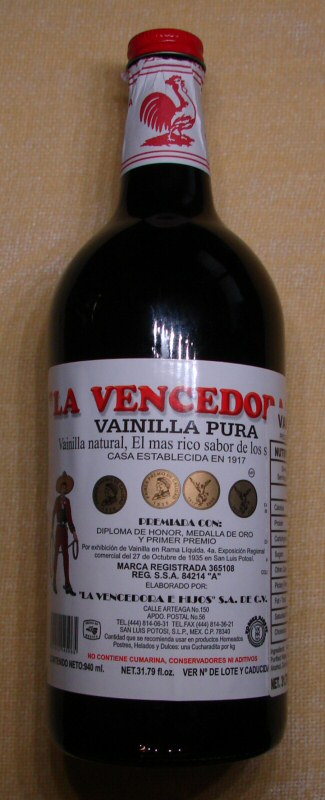
My daughter mentioned that we need vanilla for cooking, so today at the store I stood looking at all the options in the spice aisle. Vanilla Extract, USDA certified organic vanilla, Madagascar vanilla. My head started to spin. I remember being a young girl and my grandparents brought a large bottle of REAL Vanilla back from Mexico. The bottle had to be about 1 liter in size. In the past I have been able to find the same bottles here in Mexican markets.  The last time I went to a tinderia I was not able to find any. But given my recent luck with honey I opted to do so research before buying any vanilla for the upcoming baking season. You know how much I LOVE to do research.
Of course I could not keep this info to myself, I had to share it with my all my friends
Your Options in Vanilla
Pure Vanilla Extract


Pure simply means it is not artificial.  Pure vanilla extract is made by steeping  chopped vanilla beans with ethyl alcohol and water. Manufacturers can use a variety of types and qualities of beans. The process of extraction takes about 48 hours then the mixture is placed in tanks from anywhere from a few days to several weeks. The aged mixture is then filtered, placed in holding tanks and eventually bottled. I was surprised to find out that pure extracts may still contain sugar, corn syrup, colors and stabilizers.

Natural Vanilla Flavoring
Natural Vanilla Flavoring is derived from vanilla beans, but usually has no or little alcohol.
A natural vanilla flavoring is derived from vanilla beans but has little or no alcohol.  Natural Vanilla Flavorings might have sugar, glycerin or   propylene (polypropylene) glycol base. Natural Vanilla Flavoring  are typically used in cooking and baked goods both at home and in commercial establishments.
Glycerin and propylene (polypropylene) glycol are FDA approved food additives. Propolyne Glycol has several uses, among them as a carrier  in fragrance oils.  Glycerin is used as a sweetener, and may help preserve foods.
Artificial/Imitation Vanilla FlavoringU.S. manufactured artificial vanilla is produced from synthetic "vanillin", Lignin Vanillin, which is made from wood by-products of the paper iindustry. This by product is chemically treated, with flavor packets, similar to those that scent perfume,  to mimic the flavor of vanilla.   Discerning palates find the imitation vanilla products to have a harsh quality with a bitter aftertaste. Despite it’s initial low cost it is not really less expensive, as it takes twice as much imitation vanilla flavoring is required to match the strength of pure vanilla extract
Tonka Beans
That’s right, some vanilla is not made from vanilla beans. The Brazilian tonka bean can be used to make a flavoring similar to vanilla.  The big problem with tonka beans is that they contain coumarin. Coumarin is toxic, causes liver damage and is a known carcinogen. Coumarin is banned from products sold in the United States since the 1950’s.   Coumarin is used extensively in synthetic vanillas made in Mexico, and the FDA still finds products containing coumarin in some ethnic  food store.. If you buy Mexican vanilla make sure it is clearly labeled “coumarin free”.  Lacking strict labeling laws as we have in the U.S., Mexican manufactured products may not list accurate ingredients.These products often are labeled in Spanish “Extracto de vainilla” or “Vainilla.”  Again, purchase from a reliable source and steer clear of those large "bargain" sized bottles from Mexico 
Synthetic Mexican Vanilla
Most of the vanilla extracts that come to the US from Mexico are synthetic. The best way to determine quality is price. If you are offered a large bottle for a cheap price it is most assuredly a synthetic product. Also, real vanilla is not "clear". No matter what the label may tell you if it is clear it is synthetic. True vanilla is amber colored. Synthetics tend to be dark and murky either from the coal tar from which they are produced or from caramel and red food colorings. Pure vanilla is expensive because it is difficult to grow commercially and is tedious to process. Actually, Mexico is no longer a significant producer of vanilla--most of it now comes from Madagascar where it can be produced more economically.
What are our Options for Vanilla?
Is it real?   So how do you know if it's real vanilla. If it's in a big bottle and cheap , it is not real vanilla. If it's expensive it is either real vanilla or it's a tourist rip-off. Since it is expensive, it is more likely to be sold in smaller bottles. Real vanilla has an amber color. Synthetic vanilla is often darker in color. Pure Mexican vanilla, though rare, is still some of the best vanilla there is. Whole vanilla beans may also be purchased. The Mexican vanilla bean is thicker and darker than the Madagascar bean. Look for beans that are moist, plump and tender, not shriveled and hard. It all goes back to reading our labels. Make sure what you are buying is labeled as vanilla, and is labeled in English. There are several recommended top Brands of Vanilla. Another option is to make your own vanilla extract. After researching my options I think that is the route we will be taking.
On a Personal  Note

In doing my research I learned that the brand I had bought in Mexican Markets and most likely the same brand that my Grandparents bought years ago is not actually vanilla.


Technorati Tags: ,

Wednesday, September 21, 2011

The Facts about Food from China

this is part of an ongoing series about Real Food. If you like what you read be sure to subscribe so you don't miss a single post.


Let me begin this post by saying that I think the Chinese Culture is a one rich in history and varied in cuisine. But lately, the great country of China has been more interested in maximizing profits while minimizing costs. In doing so they have had grave problems with food safety.
There has been a lot of news over the years about contamination of food from China. Most recently the news was about Arsenic in Apple Juice and earlier this summer we heard news about Honey being smuggled in from China.  So should we be shocked? No not really. China has had a long history of food safety problems. 
2007 – Malachite green is found in farmed fish imported from China. It is used to prevent infections in crowded fish ponds, but it can cause cancer and has been banned by the FDA for use in fish to be consumed by people.  The move came after 25% of the Chinese products the FDA sampled from October through May were found to contain residue of chemicals the FDA doesn't allow in fish. Most are known or suspected carcinogens. source. China remains the biggest producer of aquacultured seafood in the world, accounting for 70 percent of the total production and 55 percent of the total value of aquacultured seafood exported worldwide.he contaminants found in the fish are the antimicrobials nitrofuran, malachite green, gentian violet, and fluoroquinolone. Nitrofuran, malachite green and gentian violet, which are used to treat fungal infections, have been shown to be carcinogenic with long-term exposure in lab animals. The use of fluoroquinolones in food animals may increase antibiotic resistance to this class of antibiotics.
2007 Garlic – garlic has been contaminated with raw sewage that was used to fertilize the soil at the farms. Chlorine was used to bleach the bulbs to the pretty white color. Ever buy garlic at the farmer’s market? And chemicals were used to  prevent the bulbs from sprouting during the months of travel from China to the importing country.
2007 – That same year 900,000 tubes of toothpaste imported from China were found to be  contaminated with chemical used in antifreeze. These products  were found in institutions for the mentally ill, hospitals, prisons and  juvenile detention centers in Georgia and North Carolina, according to The New York Times.
2007 – Ginger Recall  The ginger was found to be contaminated with aldicarb sulfoxide, a pesticide that can cause nausea, headache and blurred vision when ingested by humans in small amounts. In larger amounts, it can cause dizziness, sweating, vomiting, diarrhea, muscle stiffness and difficulty breathing.
2007 – All of the above was preceded by the largest pet food recall in US history because of melamine in the dog food. Melamine was used as a filler to bulk up volume in the food as well to give the appearance of higher protein content. The recalled pet food was then fed to livestock. Melamine is normally used in making plastic.
2008-2011  Melamine in Milk – this is an ongoing problem in China that first surfaced in 2008 and is continuing to cause problems this year.  The milk caused the death of several infants and the illness of countless more.  The melamine gives watered down milk  the appearance of  a high protein level.Perhaps most disturbing about the melamine in milk is that milk is used in many baked products.By the way - Do you know where McDonald’s gets it’s pies and other baked treats?
2011 – Exploding Watermelon – This summer there were stories about watermelon exploding in the fields. We now know that farmers gave the watermelons growth hormones that caused them to grow so fast they exploding.   The bad fruit was then fed to livestock (again).
2011  Cadmium in Rice Earlier this year 12 million tons of rice where found to be contaminated with cadmium, a heavy metal known to cause cancer.This problem is said to stem from the industrialization of the farm belt in China, Cadmium is used in the manufacturing of computers and other electronics.  Some samples were contaminated with up to five times the legal limit.
 2010  Bleach in Mushrooms  A young boy after having his mother tell him he could not eat mushrooms due to them being treated with bleach, began a study with the help of a PhD student and found that 81 per cent of fresh mushrooms on sale in the Chinese capital are bleached with harmful chemicals.Consuming bleaching chemicals can damage the liver and trigger asthma and skin allergies.
2011 - Borax in Pork, – borax was used in pork to make it look like beef
2011 –  There are other reports of  human birth control chemicals being used on cucumber plants, artificially dyed peppers and barite powder being injected into chickens to increase their weight.

food chinese


The Problem with Food Safety in China
As  I was doing research for this the same thing kept on coming up over and over, people in China have HIGH concerns for their own food safety. It is the number one topic  Many state farmers there will even grow their own food. That simple fact alone speaks volumes about the safety of food coming out of China. As a result, Chinese consumers fear for what is in their food. “Basically, people now feel nothing is safe to eat,” Sang Liwei, of the Food Safety Forum, told the  NY Times. “They don’t know what choices to make. They are really feeling very helpless.” Many wary customers in China prefer to buy imported goods, as they believe them to be safer. However, the Fruit Industry Association of Guangdong province told reporters that most ‘imported’ fruit are grown in China.
In a related story, activist Zhao Lianhai has disappeared after he was sentenced last month to two and half years in prison for seeking justice on behalf of the children poisoned in the melamine-milk scandal. The families involved  have not yet received any adequate compensation to pay for the expensive medical treatment the children require.
The Chinese have good reason to worry that heavy metals, pesticides and other contaminants are creeping into their food. China is the world's biggest producer and user of pesticides, and many farmers over-apply pesticides and fertilizers to get greater yields on limited arable land.
Matthew Crabbe, the managing director of Access Asia, a Shanghai-based market research firm.
Crabbe said foreign firms that obtained food ingredients in China "would probably be safer to actually buy some farmland there and grow  it themselves."
Food safety has become an issue in China because of increased pressures to produce more food on less than desirable land.  Couple that with the fact that China manufactures and uses more pesticides than any other country and you have the perfect mix for chemical warfare on food.
In the course of research for this post I found out that it is possible to get organic produce in China. Organic produce is reserved for important government officials and athletes.

What can we do?
Reading labels is often not enough, Products like garlic and ginger are often removed from their cases and merchandised loose in bins or on shelves. This problem is not new and looks like it will be continuing for a while, since China  does not have enough food safety inspectors to check food.  When food safety is concerned my advice tis to grow what you can on your own, and know where your food is coming from.  I really enjoying knowing the people that  I get my food from personally. I am even lucky enough to call some of them friends.

additional resources
China Food Safety
Tropic Post – China’s Wide Spread Contamination of Food

As I was doing research for this post I did find out that you can get organic food in China. Organic food is reserved for important government officials and star athletes. So while they believe in altering the food and throwing tons of pesticides at it in order to increase production, they also acknowledge that organic food is better for you, by reserving the best  food for the elite.

This post is linked up with Green and Natural Mamas, Living Well Blog Hop, Your Green Resource, Fresh Bites Friday,Traditional Tuesdays t

LinkWithin

Related Posts Plugin for WordPress, Blogger...
Thanks for joining me here, if you enjoy what you see take a moment and join me you can, Subscribe by RSS Feed or find me on Twitter or Facebook and Pinterest